
THE PEOPLE BEHIND THE WOOL
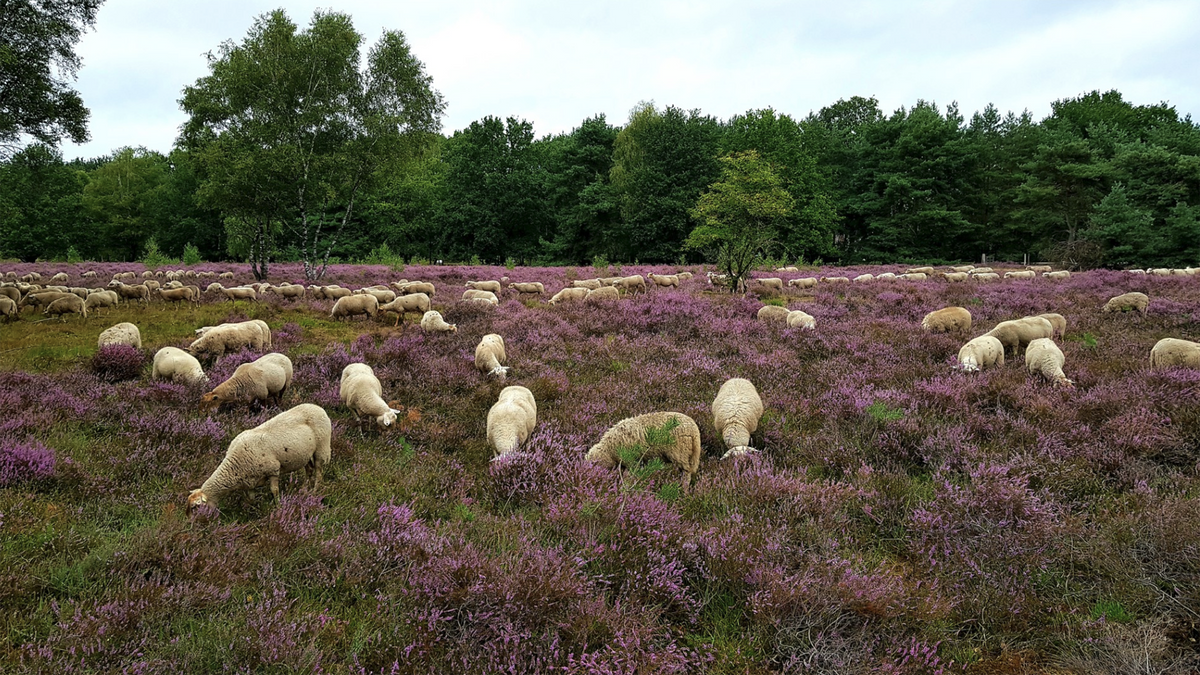
Sjraar van Beek's flocks don't just wander through the landscape. They keep the heathland open, contribute to biodiversity, and provide a material that for a long time had little value. This is precisely where an important story about Dutch wool begins for us.
The value of wool doesn't begin with softness. It begins with understanding what you hold in your hands.
The landscape as a starting point
It didn't start with wool, but with the heathland.
During biodiversity research, Sjraar van Beek observed what happened when grass increasingly took over. Heather plants disappeared. His proposal was as simple as it was ancient: let sheep maintain the landscape.
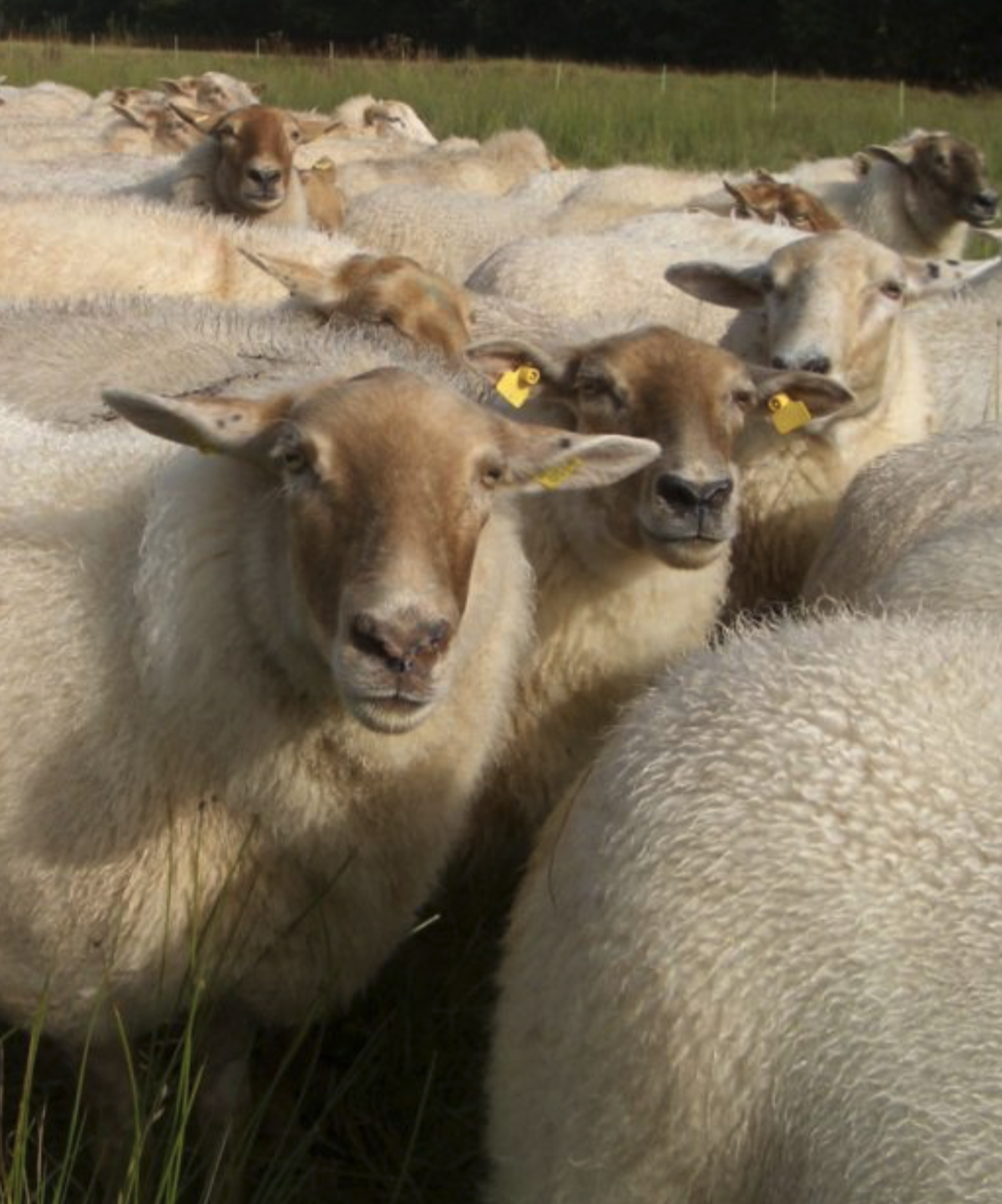
For this, he brought Kempische Heath Sheep to the heathland. An old Dutch breed traditionally kept not only for grazing, but also for manure and wool.
What began as a way to manage the landscape grew into Landschapsbeheer De Wassum (Landscape Management De Wassum). Now, various flocks with their shepherds roam through nature reserves around Heeze and Roermond, among other places.
A sheep with a purpose
A heath sheep is part of the landscape in which it lives. As the flock grazes, grass is pushed back, creating new space for other plants.
This makes the animal's value greater than just the wool it produces every year.
And yet, precisely that wool became less and less valuable.
Due to the disappearance of the Dutch wool trade and the loss of sorting, different qualities increasingly became mixed. Wool that was suitable for high-quality applications thus lost its purpose along with the rest.
For Sjraar, this was a reason to look more closely at his own flock.
Re-evaluating the fleece
Research into the wool of thousands of sheep showed how much difference there can be within a flock. Not every fleece is the same. Fiber thickness, quality, and even the timing of shearing play a role in what you can ultimately make with the wool.
This knowledge allows Sjraar to select his wool much more precisely and to work on the quality of future fleeces through breeding.
For us, that's precisely where a Dutch wool chain begins: not trying to make the material something different, but understanding what is already there.
From flock to knitwear
The collaboration with Sjraar gives us access to more than just a raw material. We learn where the wool comes from, how the animals live, and what characteristics different fleeces have.
We incorporate this knowledge into the design process.
Some wool is suitable for clothing. Other qualities work better in a blanket or another textile product. By designing from the material, we can increasingly give Dutch wool a purpose where its own character is precisely a quality.
This creates a chain where landscape, animal, shepherd, and maker are reconnected.