
Newsletter June

Regeneration
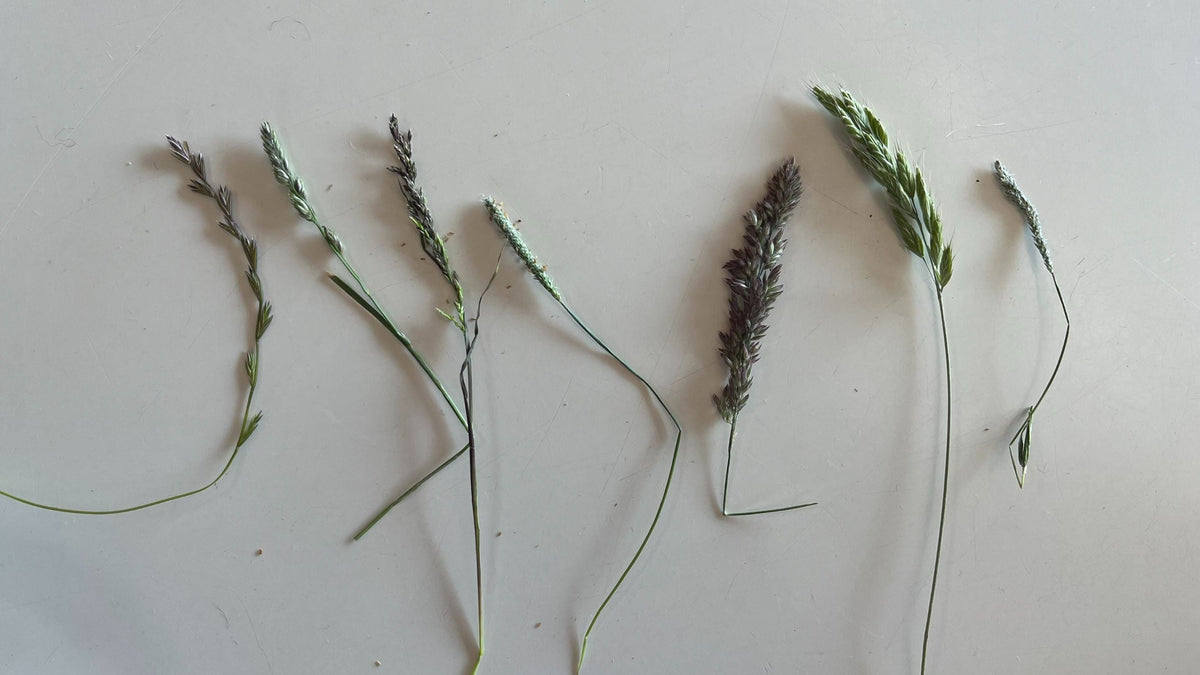
This month we have a lot to tell about the steps we are taking towards regenerative practices. Regenerative agriculture has several definitions, but at its core, it's about a farming method that prioritizes the health and biodiversity of the soil and the natural ecosystem. Regenerative thinking and action focus on actively restoring and improving systems, both ecologically and socially, so they can flourish. At The Knitwit Stable, we strive for a biocircular system: from soil to sheep, from sheep to garment, and from garment back to the soil. We are currently investigating how we can further improve our agricultural system, with more attention to the well-being of our sheep, goats, and the soil. This includes a possible transition to holistic grazing, food hedges with herbs for dyes, and herb-rich grasslands.With our new intern Maxime from Wageningen University, we are identifying the characteristics of the soil around The Knitwit Stable to create a plan for an even healthier and more biodiverse soil. The Lenteland annual program, which Reina follows, also helps enormously. It provides a lot of inspiration for better biodiversity management. There is still a long way to go, but the most important foundations are being laid now.
Square Meter Flax

At The Knitwit Stable, we started a small flax project this spring through 1m2 flax from Crafts Council. Primarily for the education center as a DIY project, but also as an exploration of the possibilities of growing flax ourselves in the future.
Based on a recent soil analysis, we found a plot of land suitable for flax – a fiber crop that has different requirements than grass or clover.
Under the flax bed, we started a composting experiment (more on this later in the newsletter). Now we are curious how flax and wool influence each other:
🧶 Does wool break down faster under flax?
🌱 And does flax grow better with textile compost?
Holistic Grazing

As part of the Lenteland annual program, Sanne Beld's knowledge day on holistic grazing was again a very valuable addition to the entire learning process towards regenerative textile farming at The Knitwit Stable.
Sanne Beld is a passionate pioneer in the field of regenerative agriculture and holistic management. With her deep-rooted love for nature, she is committed to connecting agriculture and nature management. With new plans in the areas of grazing, fodder hedges, and herb-rich grassland on the way to a more sustainable future!
More information about Lenteland
Merino cardigan Bente

The Bente is one of the few cardigans in our collection that we offer in merino wool. In fact, we knitted the Dory (made of mohair) with our 100% Dutch merino yarn. This fine, shorter cardigan has a semi-fitted silhouette that goes with everything. Perfect for those typical spring days when the sun briefly hides behind the clouds or when the wind picks up significantly.
The wool is collected locally and carefully spun and dyed in Italy. The result: a cardigan that doesn't itch, doesn't wrinkle, but is wonderfully warm.
A classic for over your dress or with your jeans.
Shop the Bente here
Burying sweaters and socks

At The Knitwit Stable, we have long focused on the compostability of our wool items.
On a Saturday, we helped Tess Geerts with a study for her Master's research project. She is studying at the Technical University in Eindhoven and is investigating the question: What could a future system look like in which consumers can compost their compostable clothing? Many clothes are not yet designed to be composted because they contain synthetic raw materials, or are chemically treated or dyed. In half a year, we will dig up the sweater and socks again. We will keep you informed about this inspiring research.
Winner Green Concept Award

Our seaweed-dyed wool rug has been awarded a Green Product Award during Berlin Design Week! The jury called it: “Simply amazing product!”
Together with Zeefier®, we developed a locally produced rug from Kempisch Heideschaap wool, dyed with sustainably harvested Dutch seaweed. The jury praised the innovative, circular approach and the low ecological footprint of the design.
Special thanks to Nienke Hoogvliet for the beautiful design and her years of dedication to seaweed as a natural dye. And to Anne Boermans and Bianca Zomer for the great collaboration.
The rug is part of our made-to-order collection on the website.
An award like this is not only recognition but also encouragement: Dutch wool belongs in the Dutch carpet industry.
We will soon start production of our wall-to-wall carpet, which can also be ordered as custom parquet; sign up!
Click for the Wool and Seaweed rug
Closing the 'loop' with a collection bin?

Under the motto “Let’s close the loop” chains like H&M, C&A, Zara, and Primark promise that your old clothes will be recycled or given a second life. A recent broadcast of Radar reveals the following.
Of the twelve garments that Radar handed in with GPS trackers to these chains a year ago, only two ended up in a Dutch thrift store, and two were actually recycled. The rest ended up in markets or, worse, on landfills in countries like Cameroon, Nigeria, and Pakistan, thousands of kilometers away.
True circularity requires more than a bin at the entrance of a store – it requires taking responsibility for the entire process, from start to finish.
Watch the clip here
Woven wool

We have been testing for a long time, and on May 2nd, we visited Enschede Textielstad, where we are collaborating on a new weaving project: a high-quality interior fabric made from our own Dutch Wool Mix. The fabric consists of 80% Kempisch Heath Sheep wool, 10% merino, and 10% alpaca.
This sustainable wool mix forms the basis for a brand new collection of woven home cushions that will soon be available from us. For the fabric, we only use undyed and untreated yarn. We vary this by mixing white and brown wool in certain percentages to achieve off-white, sand, and taupe shades.
In addition to the cushions, the fabric will also be available for B2B sales, ideal for designers or brands who want to work with local and fair textiles.
We can't wait to share the final result. To be continued!
Click here for the Enschede Textielstad website

Masterclass & workshops
Have you already visited for a workshop or masterclass? But would you like to come? Mark the following dates in your calendar:
Masterclass for individuals
From Goat to Garment - From Sheep to Sweater.
The next Masterclass dates are:
- July 18, 2025, from 10:00 AM to 4:00 PM
- September 12, 2025, from 10:00 AM to 4:00 PM
- October 10, 2025, from 10:00 AM to 4:00 PM
Workshops
Come to one of our workshops and make your own mohair scarf/wrap from young Dutch goats. No experience is necessary.
The next dates for our workshop are:
- September 05, 2025, from 1:00 PM to 4:30 PM
- October 03, 2025, from 1:00 PM to 4:30 PM


Leave a comment
This site is protected by hCaptcha and the hCaptcha Privacy Policy and Terms of Service apply.