


March Newsletter

Lambs and new wool season
The first lambs have been born again at The Knitwit Stable. Last week, eight small newcomers arrived, officially marking the start of the new season on the land!
For us, it remains a special moment every year. Because this is literally where the story of wool begins. With the animal, on the land.
Most lambs are born in early spring. This is no coincidence: the grass starts to grow again, and nature slowly awakens. The ewes have enough food, and the lambs can grow up in a season where it gets progressively warmer.
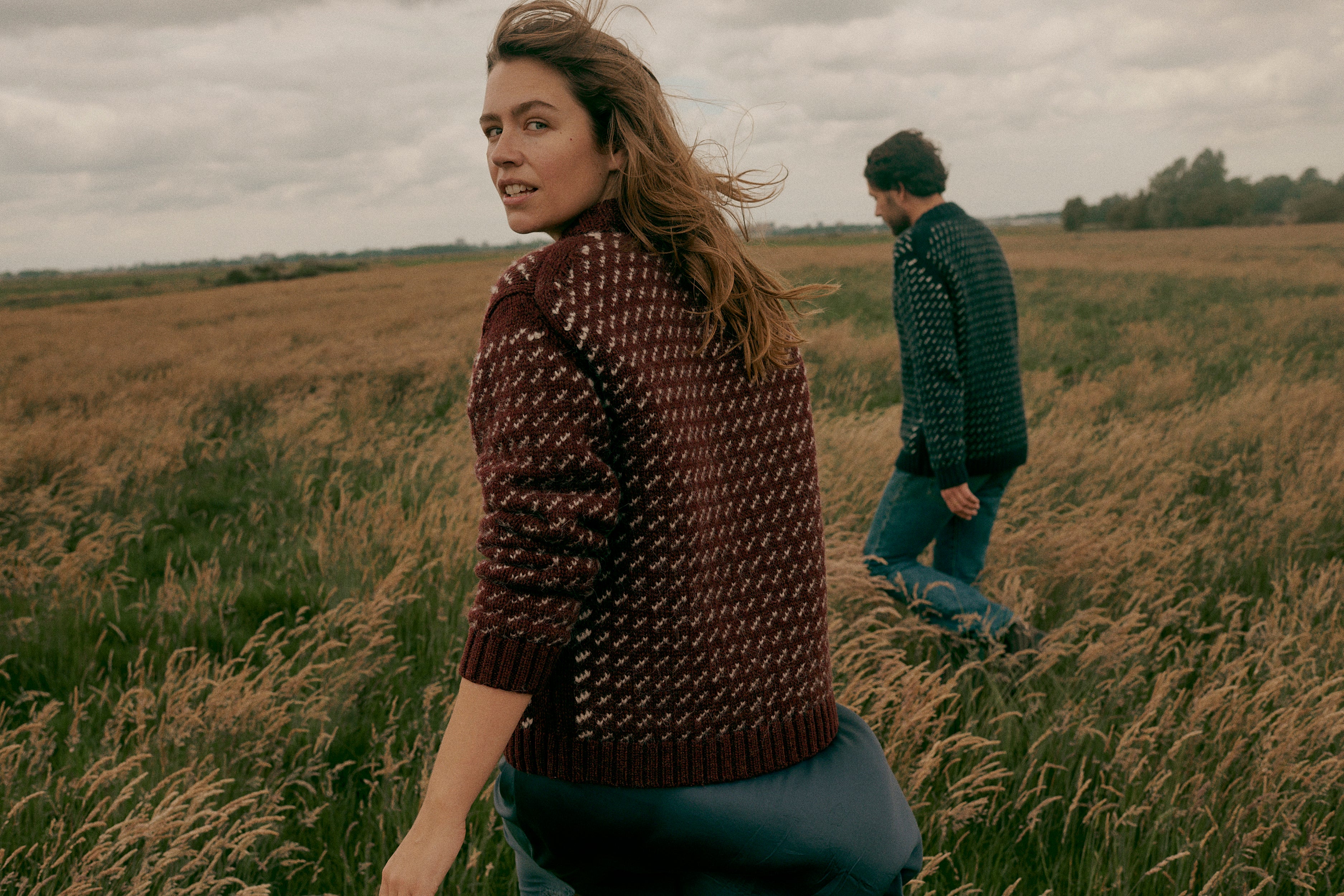
While the lambs take their first steps and curiously discover the world, the new wool on the sheep also continues to grow. Later in the spring, the sheep are shorn, and the next step begins: from fleece to fiber, from fiber to yarn, and finally to a sweater, cardigan, or blanket.
For now, we mostly enjoy the young life on the land. Small jumps in the grass, lambs staying close to their mothers, and a farmyard that slowly becomes fuller again.
Update from Baambrugge
In recent years, we have produced many of our pieces on request. This gave us the space to work on a small scale and carefully handle Dutch wool.
In the coming months, we will fully focus on developing and producing a new collection. Therefore, we are temporarily not accepting new orders for items that are not in stock. For now, only items that are immediately available will be in our webshop.
Behind the scenes, we continue to work on new designs, materials, and production series. This autumn, we will present a new The Knitwit Stable collection. We look forward to sharing it with you then!
The Knitwit Stable grows

At The Knitwit Stable, we are building a new textile system.
From Dutch sheep's wool to clothing.
Our community is growing, and more and more projects, collaborations, and activities are happening on the farm and in the knitting studio. That's why we are looking for an Operational & Community Coordinator to help ensure everything runs smoothly.
A role for someone who gets energy from bringing structure to a dynamic, creative environment and enjoys working at the intersection of agriculture, textiles, and community.
📍 Baambrugge
🗓 3–4 days per week
Fodder Hedge Planting Day

On March 2, together with volunteers from the Utrecht Landscape Management Team, we planted the first 200 meters of fodder hedges on our land at The Knitwit Stable. It was a beautiful day, and it was great to be working outdoors with so many helping hands!
Fodder hedges are hedges with a mix of trees and shrubs that sheep can eat. The leaves and young twigs contain minerals and natural substances that contribute to healthy animals and ultimately to the quality of the wool.
The hedges have multiple functions. They provide food for livestock, shade on warm days, and healthier soil because different root systems improve soil structure and retain rainwater better. At the same time, they promote greater biodiversity. Birds, insects, and small mammals find food and shelter there, strengthening the ecosystem around the farm.


Lenteland - Regenerative Farming

Reina recently completed the Lenteland annual program. In this program, farmers and entrepreneurs collaborate on ways to bring agriculture back into better balance with soil, biodiversity, and landscape.
She also took a soil course and attended a study afternoon on agroforestry. These trajectories offer new insights into how agricultural systems can become more resilient and how soil, nature, and production can reinforce each other.
Many of these insights are also applied to the land around The Knitwit Stable. A small example of this is the planting of fodder hedges, which we mentioned in the section above.
DOEN Foundation Fund

With the support of the DOEN Foundation, The Knitwit Stable can continue to grow. This strengthens the chain, keeps costs better balanced, and retains more value in the Netherlands. The goal is to grow into a stable exemplary business that demonstrates that a regenerative wool chain works and that others can follow this model.
Join our educational workshop Bets or masterclass Farm to Fashion

Workshop Bets – make your own scarf
Get started with our local mohair from the Angora goats on the farm. During this practical afternoon, you'll work on the hand-knitting machine (no experience needed) and go home with your own scarf. Includes a short tour.
Wednesday, April 15 | 13:00–16:30
(min. 6 participants)


Leave a comment
This site is protected by hCaptcha and the hCaptcha Privacy Policy and Terms of Service apply.