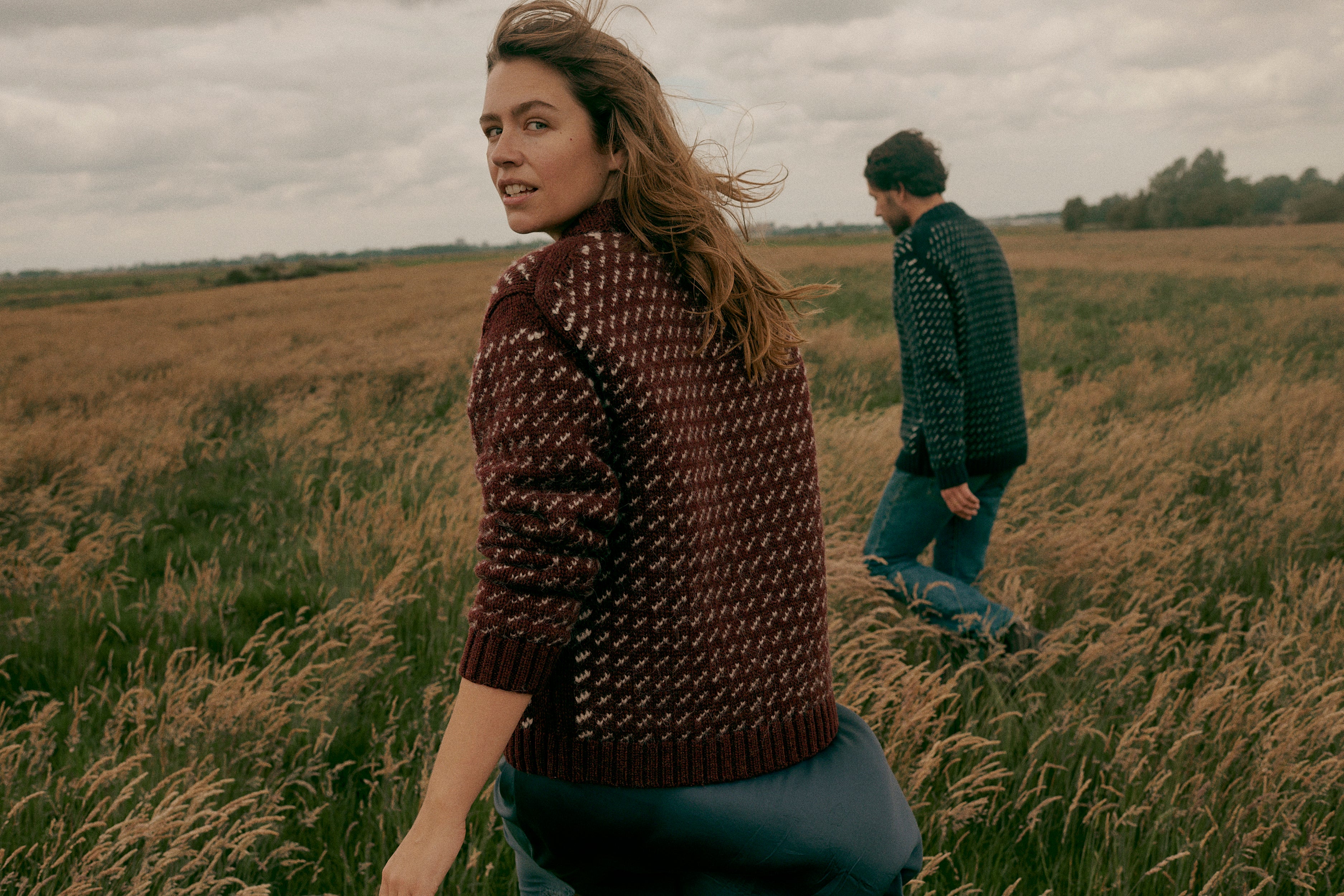
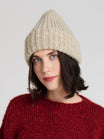

Today is Warm Sweater Day, the day of the year specifically dedicated to combating energy waste. More than half a million Dutch people will wrap themselves in a warm sweater today and turn down the heating. With this small action, they save 6% in energy and CO2 per degree, which translates into a saving of 1 megaton of CO2 if the entire Netherlands were to turn down the heating by one degree every day during the heating season. This combination of knitwear and sustainability is essential for Reina Ovinge, founder of The Knitwit Stable, to make a positive impact for people, the environment, and animals in the textile industry.
The return of craftsmanship
Those who think of a warm sweater think of wool, but the reality is that sweaters today often consist of cotton or synthetic yarns. With a fashion system characterized by faster, more, and cheaper, many fashion brands often ignore wool to save costs. The sustainable qualities that wool has to offer are thus lost.

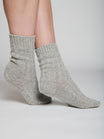
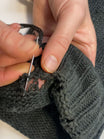
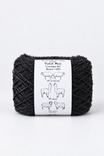
Reina Ovinge, founder of The Knitwit Stable, brought about a change in this in 2013 with her farm and knitting studio in Baambrugge. On 11 hectares of land, she keeps Merino sheep, Texel sheep, and Angora goats whose fleeces form the basis for all kinds of textile products, such as sweaters, scarves, and hats. The Knitwit Stable also regularly collaborates with other companies, makers, and designers. For example, The Knitwit Stable and the Dutch fashion brand Scotch & Soda joined forces last year for the production of a unisex cardigan, 80 percent of which came from Texel sheep and 20 percent from alpaca. In addition to its own fashion label, The Knitwit Stable advises companies and fashion professionals in their sustainable transition. Among other things, they advise on animal-friendly husbandry and sustainable production and processing of materials.
Abuses in the clothing industry
Reina worked for 20 years in the fashion industry as a buyer and later as a supplier. A period during which it became clear to her what structural problems the fashion industry suffers from. Pollution, unfair wages, and exploitation are some of the problems that are often not visible in the supply chain. An incident with a manufacturer, however, was the last straw for Reina; she quit her job and started her own company as a counter-movement.
"An assistant in the Netherlands sent labels too late to the manufacturer, after which girls on the other side of the world were dragged out of bed to quickly sew labels into the clothes for shipment."
This incident made Reina realize that change in the industry is needed, and she decided to set up The Knitwit Stable. According to Reina, in addition to government measures, awareness is needed to change the entire chain; consumers are not sufficiently concerned with the process behind a 20-euro cardigan. Awareness about the production process is a first step, only then is there a possibility for behavioral change and will sustainable activities shift from margin to mainstream. Look at vegetarian eating, that is also happening much more now. The mentality is changing and people are becoming more aware. Much more clothing is already bought second-hand and a sweater from Primark will soon really be 'not-done'." Reina also says that her customers wear their purchases with pride. "With a sweater from Knitwit Stable, the consumer knows where the product comes from and how it is made, which creates respect and appreciation."
The revaluation of Dutch wool
In addition to the negative impact of the clothing industry on people and the environment, the disappearance of wool is a development that is less often brought to attention. Over the years, it has become almost cheaper in the Netherlands to throw away wool than to process it, as farmers receive 10 cents per kilo. As a result, more than 1 million kilos of wool from our Dutch sheep are shipped annually to China for rock-bottom prices to end up as filling for car seats or carpets. The qualities of wool, such as the fact that it is renewable, temperature-regulating, self-cleaning, and low-maintenance, are therefore not utilized.
The goal of social entrepreneurs like The Knitwit Stable is to narrow the gap between producer and consumer with a revaluation for craftsmanship, process, and origin. The Knitwit Stable is thus the first brand in the Netherlands to have a completely transparent production chain. The process is uncovered from sourcing to final product, allowing the consumer to know which sheep the wool comes from and which employee subsequently manufactured it. It is even possible to visit the farm in Baambrugge, which ensures that people can not only read and view the story of The Knitwit Stable, but also physically experience it; a crucial element for behavioral change.

Transparency in the supply chain is an important step towards a sustainable and fair fashion industry. With her farm and knitting studio, Reina makes this a reality on a small scale, but transparency is also a hot topic among major fashion brands. This leads to the common problem of contradictions that Reina also encountered in her role as a supplier. For example, fashion brands wanted to achieve higher sustainability standards on the one hand, but this also had to be combined with increasing profit margins.
"There are brands that shed light on their supply chain, especially with wool or mohair this is happening more and more often. Brands like Arket and Patagonia show where their wool comes from and the farmers they work with are traceable. H&M, on the other hand, is very busy trying to source responsible wool; the Responsible Wool Standard is an initiative of H&M itself. But the strange thing is that it seems as if H&M has two hats on, as knitwear is still on the shelves for a few tens."
Brands therefore feel pressure to become more sustainable on the one hand, but then do not systematically address this problem, so the business model still revolves around high volumes, many collections, low costs, and year-round sales.
Ordered today, delivered in two weeks?
The Knitwit Stable works according to a made-to-order principle, which means that buyers have to wait at least two weeks before receiving their order. But is that what consumers are waiting for? Reina indicates that this waiting time actually creates an opportunity to let people experience how much time and effort goes into making a sweater.
"At large fashion companies like H&M, people see knitwear for prices around twenty or thirty euros, and are then unaware of the fact that automatic, industrial machines need an hour to finish one sweater. This means that at such low prices you can actually immediately see that someone at the bottom of the value chain is paying the price."
That the average participant in Warm Sweater Day does not wear a Knitwit Stable item will not come as a surprise to Reina. In addition to the fact that the made-to-order principle is not for everyone, the price tag of The Knitwit Stable (a sweater is available from €375) is not within many people's budget. The real, fair price of a woolen product, which is used at The Knitwit Stable, is not yet the norm, but by experiencing the entire production process of a sweater from Baambrugge, it will probably not quickly disappear into the wardrobe behind dirt-cheap impulse purchases.


Leave a comment
This site is protected by hCaptcha and the hCaptcha Privacy Policy and Terms of Service apply.